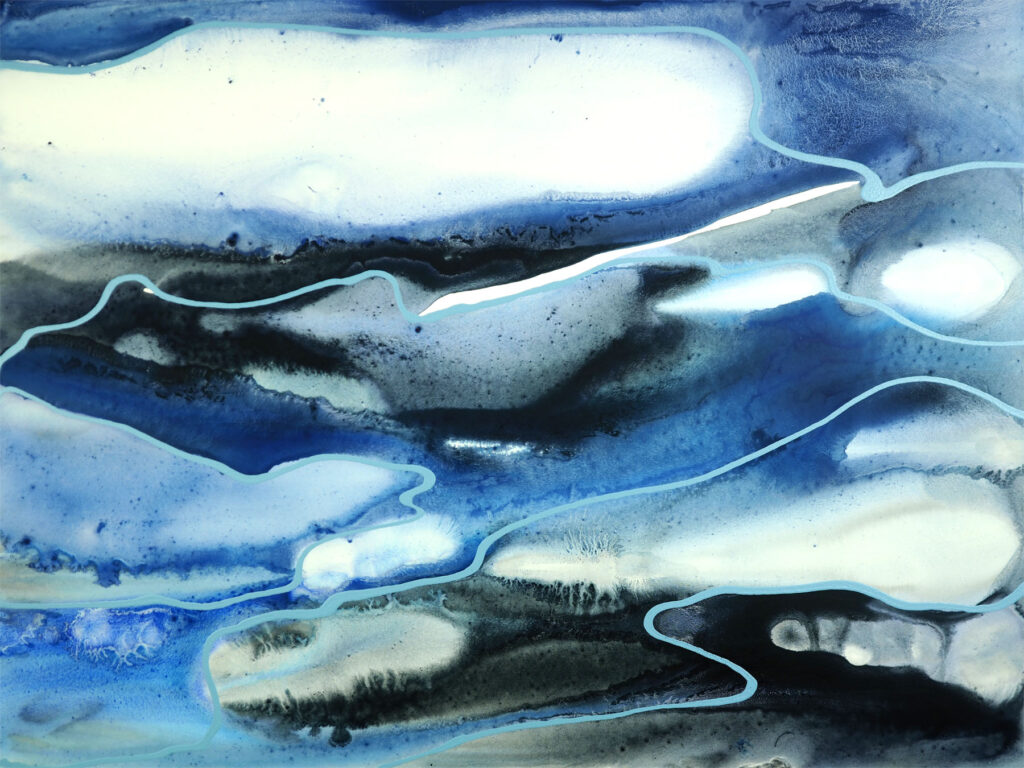
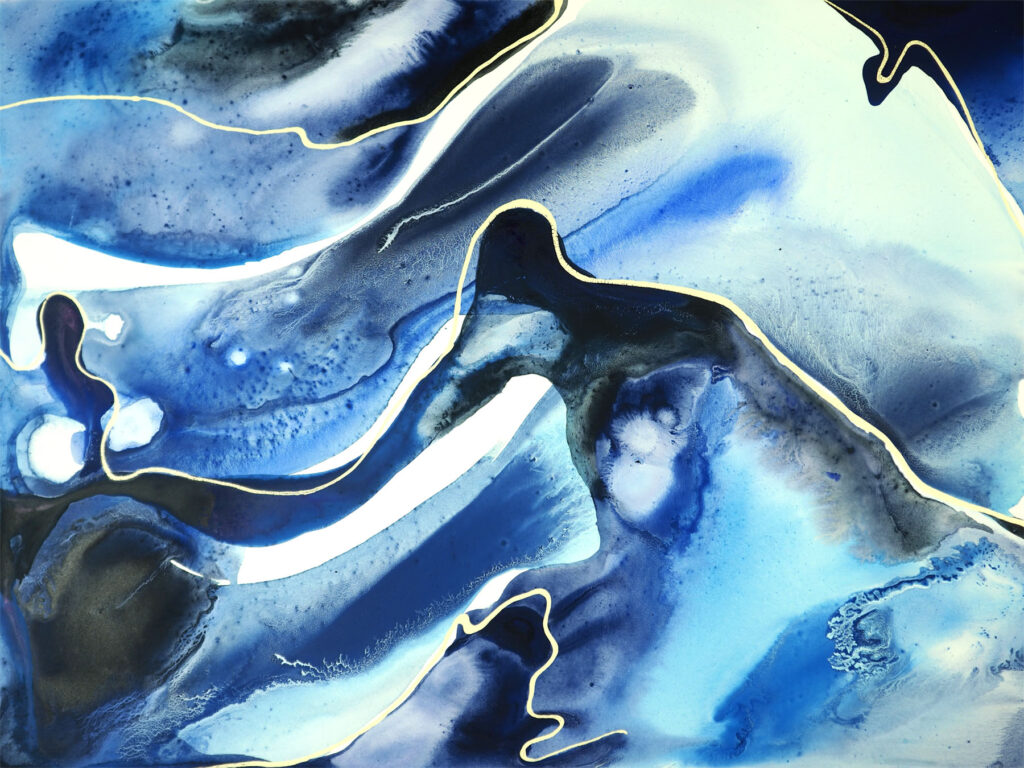
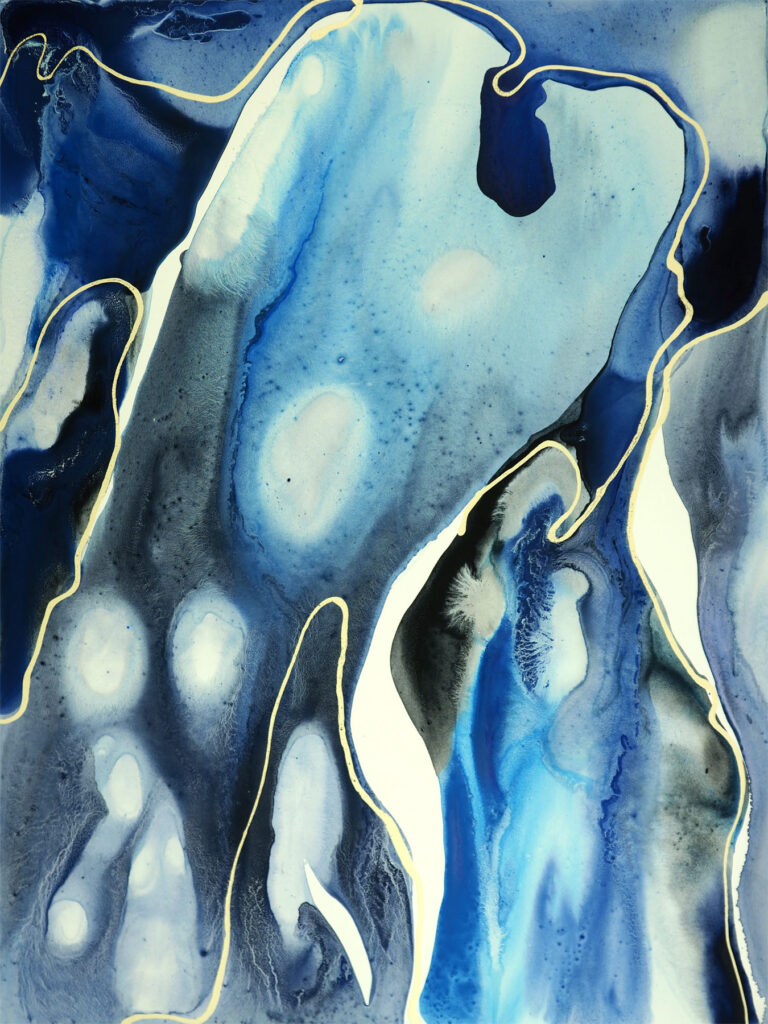
Metamorphopsia linear abstraction – Vidal Toreyo

Linear abstraction is a movement in abstract art that is based on the dominance of lines as the primary means of artistic expression. In contrast to more painterly varieties of abstraction that focus on color, texture, or spontaneous gesture, linear abstraction focuses on structure, rhythm, and composition built using simple or complex arrangements of lines. It often uses precise, geometric forms, although it can also take on more expressive, dynamic graphic forms.

In the case of Vidal Toreyo, who paints in the style of visual expressionism, the introduction of abstraction elements can serve to organize the composition or emphasize the emotional tension contained in the work. The lines in his works can be not only a formal means of constructing the image, but also a tool for emotional narrative – twisted, broken, overlapping lines can symbolize chaos, tension, or the disintegrating inner reality of the protagonist of the painting.

In a more classical sense, abstraction is also associated with minimalism, where lines organize the space of the image, creating rhythmic arrangements, grids or series of repetitions that affect the viewer almost like visual music. It can also refer to the concept of constructivism, where the line as a technical and rational element provides the basis for a composition that is more intellectual than emotional.

Depending on the context, lines can therefore play different roles – they can be a pure abstract form, a sign of emotion, a tool for analyzing space or a symbol of order and control. In the practice of Toreyo, who combines expressionism with elements of abstraction, the line not only builds form but also becomes a carrier of tension, a pulsating trace of creative experience.

Vidal Toreyo paints in the style of visual expressionism, which focuses on expressing the artist’s emotions and inner experiences, rather than on realistic representation of reality. His work is dominated by intense colors, violent brushstrokes and deformed forms, which allows for the presentation of strong emotions and mental states of characters or landscapes. Characteristic of this style is the presentation of the world exclusively from a subjective point of view – the artist consciously distorts reality to better convey his own feelings and experiences. Toreyo does not strive to reproduce the surrounding world in a faithful and objective way, but rather transforms it so that it becomes a carrier of an emotional message. In this way, his paintings evoke strong reactions in the viewer – they not only show the mood, but often also provoke reflection on the human condition, the nature of suffering, joy or loneliness. Visual expressionism in his version is the art of experience, full of drama, tension and emotional depth.